The Architecture of Accretion
Artist: Sirpouralot
Medium: High-Resolution Digital Master / Lossless .PNG
The universe is not a chaotic accident, but a self-tidying masterpiece. Space is filled with the debris of dead suns—jagged, violent shards of iron and silicate—until gravity finds its voice. These works document the transition from the 'shattered' to the 'spherical.'
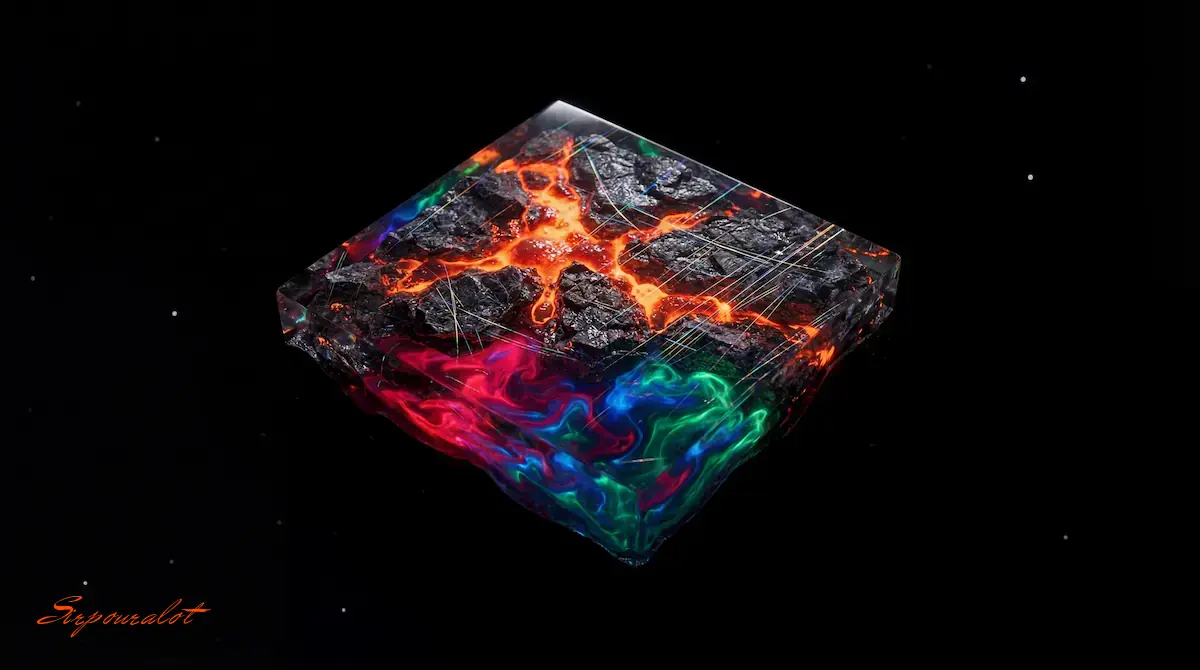
I. Planetesimal: The Jagged Embryo
Before the sphere, there is the shard. This stage represents a "world-in-waiting," drifting through the velvet dark. It is a time of violent friction where the cooling of fire creates the first geometry of a planet:
Magma Fissures: Glowing veins of liquid iron that scream through the obsidian chest of the shard.
Thermal Scars: The prismatic result of billions of collisions that add mass while maintaining a jagged, non-spherical design.
Stardust Veins: Frozen ribbons of silicate dust, the cosmic debris that will eventually fuel a living core.
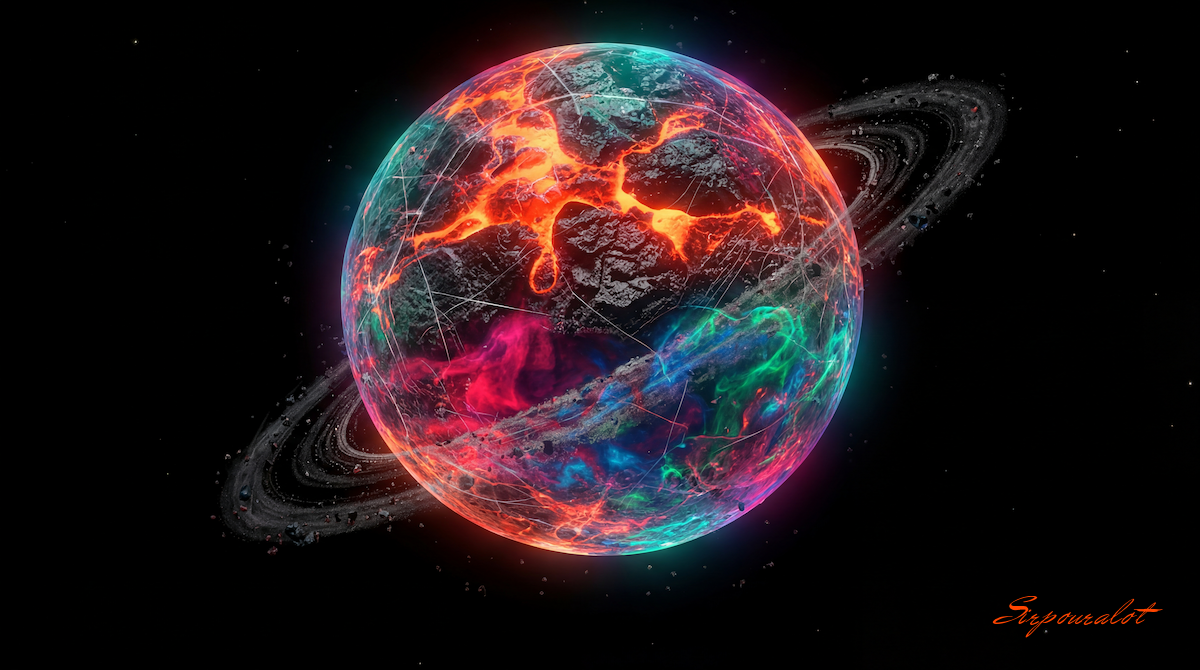
II. The Accretionist: The Universal Housekeeper
As mass grows, so does purpose. The Accretionist represents the moment of "becoming of age." By achieving a spherical shape, the planet gains the gravitational authority to clear its path. It is the universe’s way of keeping house—gathering the loose debris of the solar system and turning "messy" space into an organized orbit.
The Evolutionary Shift: Together, this diptych documents the shift from a passive drifter to an active architect. It is a meditation on growth, maturity, and the elegant efficiency of a universe that uses its own debris to build the foundations of a new world.